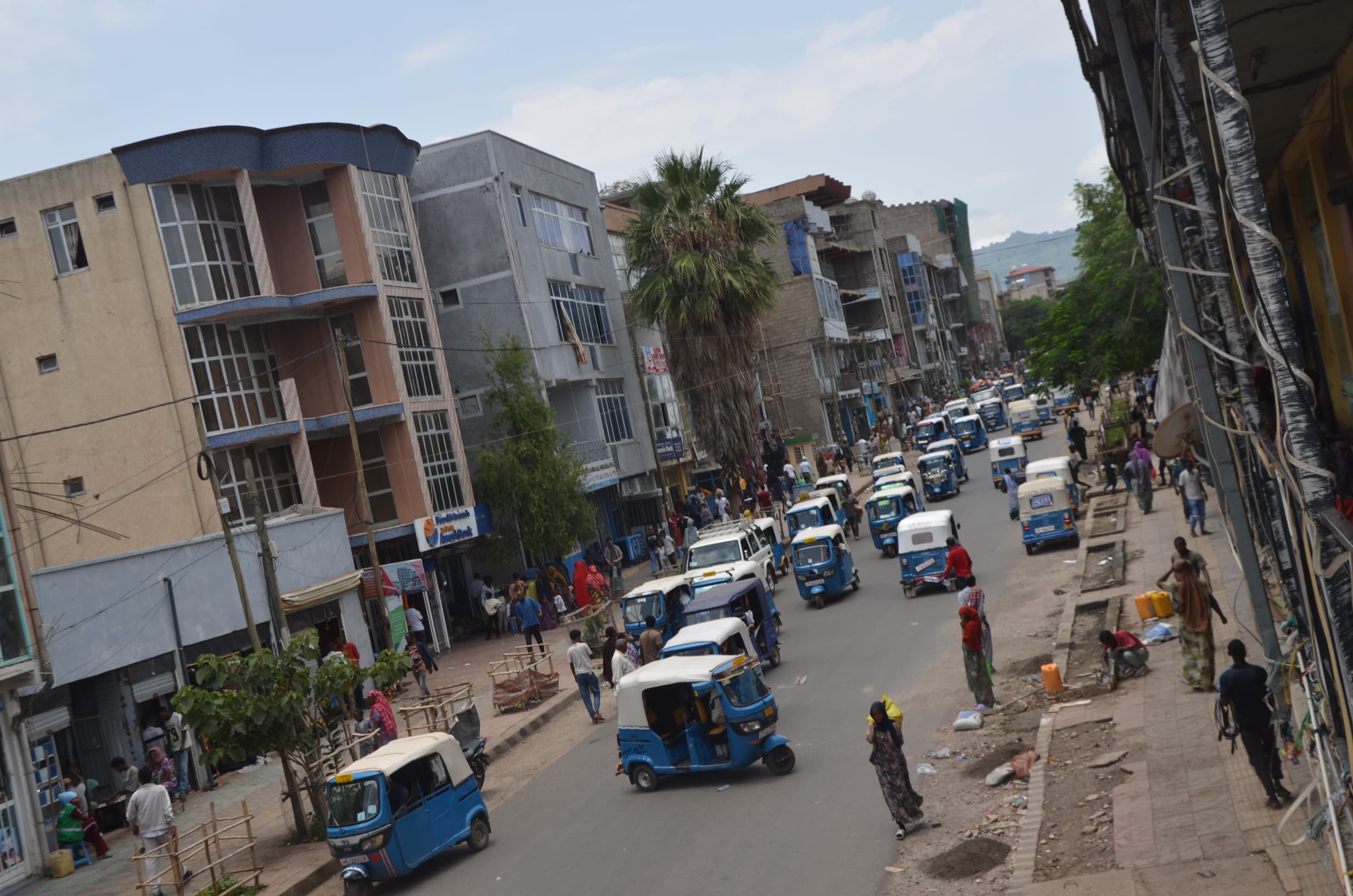
National Dialogue • Ethiopia
The Ethiopian National Dialogue:
Major Strengths, Weaknesses and the Road Ahead
An evidence-based assessment of Ethiopia’s National Dialogue,
examining participation, institutional arrangements, agenda-setting,
consensus-building, implementation challenges and opportunities
for sustainable political and social stability.
Author: Milki Mekuria Yadessa
National Dialogue Assessment
Ethiopia
2026
Key message:
National dialogue can create an important platform for addressing political
crises, violent conflict, institutional weaknesses, social divisions and
contested questions of national identity and governance. The assessment
examines what the Ethiopian National Dialogue achieved, where it faced
serious limitations, and what is required to translate dialogue outcomes
into sustainable institutional and political change.
What Is a National Dialogue?
National dialogue is a structured process through which different sections
of society deliberate on fundamental questions affecting the political,
social, economic, constitutional and institutional future of a country.
Unlike ordinary political consultation, national dialogue is designed to
address issues of overarching national significance and to create space
for polarized actors to communicate and search for commonly acceptable
solutions.
The assessment explains that national dialogue is particularly relevant in
countries experiencing political crises, armed conflict, contested
constitutional arrangements, authoritarian legacies, ethnic or religious
divisions and serious governance disputes.
Such processes can address constitutional reform, governance, elections,
decentralization, political power, security-sector reform, national identity,
human rights, transitional justice and resource allocation.
A major distinction is that national dialogue seeks participation beyond
political and military elites. It can involve political parties, civil
society organizations, women, youth, religious leaders, traditional
authorities, minorities, professional associations, academics, businesses,
victims and displaced people.
The Ethiopian National Dialogue in Context
According to the assessment, Ethiopia’s National Dialogue took place from
July 15 to August 22, 2026, with the stated objective of
addressing deeply rooted political and social conflicts and contributing
to sustainable peace and social cohesion.
The process emerged within a difficult political environment characterized
by longstanding political disagreements, identity-related tensions, armed
conflicts, institutional mistrust and competing views about Ethiopia’s
political future.
The assessment evaluates the dialogue according to several dimensions,
including institutional arrangements, participation mechanisms,
methodology, achievements and challenges.
Key Numbers From the Dialogue
126,222+
Citizens engaged
1,234
Woredas reached
29.7%
Women among woreda/regional participants
~5%
Persons with disabilities among delegates
The assessment reports that the Ethiopian National Dialogue Commission
(ENDC) directly engaged more than 126,222 citizens across 1,234 woredas.
Women represented 29.7 percent of participants at woreda and regional
state levels, while persons with disabilities represented approximately
5 percent of the total delegates.
At the same time, the author cautions that numerical participation alone
does not automatically mean meaningful inclusion. The quality of
representation and the actual influence of participants on deliberations
are equally important.
Major Strengths of the Ethiopian National Dialogue
1Political Will
Political will is identified as one of the most important conditions for
a successful national dialogue. Dialogue cannot achieve durable results
if political actors participate only for tactical reasons while continuing
to pursue their objectives through coercion.
The assessment observes evidence of political commitment from the
government and participating actors. The government allocated resources
for the process and extended the lifetime of the Ethiopian National
Dialogue Commission when it could not complete its mandate within the
originally stipulated period.
Important lesson:
Political commitment must continue beyond the dialogue itself. The
implementation of negotiated solutions requires sustained commitment from
government and opposing political actors.
2A Legitimate Convener
The Ethiopian National Dialogue Commission was established under
Proclamation No. 1265/2021 as the institutional convener
of the process.
Its mandate included identifying differences among political and opinion
leaders, developing agendas, organizing forums and facilitating
deliberations.
The assessment considers the Commission’s institutional role and resources
important to the credibility and organization of the dialogue.
The Commission also collaborated with indigenous institutions and used
seven stakeholder groups to help select delegates and identify key agendas.
These included local social-security institutions, religious institutions,
civil society organizations, political-party coalitions, teachers’
associations, judicial associations and woreda administrations.
3Broad Public Participation
One of the clearest strengths identified by the assessment was the scale
of public participation.
Participants included political parties, government institutions,
opposition groups, women, youth, ethnic and linguistic communities,
religious communities, traditional leaders, persons with disabilities,
diaspora communities, civil society organizations, business communities,
professional associations, farmers, pastoralists and academics.
The ENDC’s outreach to more than 126,222 citizens across 1,234 woredas
helped decentralize the dialogue beyond an exclusively Addis Ababa-centered
process.
This broad geographic and social reach is important because a national
agreement is difficult to sustain if citizens perceive it as an agreement
created exclusively by political elites.
4Clear and Comprehensive Agenda Design
The assessment reports that thousands of public submissions were
classified, consolidated, validated and prioritized into eight major
thematic pillars.
| No. |
Core Thematic Pillar |
| 1 |
Nation-building |
| 2 |
Government structure and the form of the state |
| 3 |
The status of federal cities: Addis Ababa and Dire Dawa |
| 4 |
Religious affairs |
| 5 |
Institution-building and the rule of law |
| 6 |
Socio-economic issues, land, farmers and pastoralists |
| 7 |
Anti-corruption and good governance |
| 8 |
Peacebuilding |
5Structured Engagement Methodology
Another major strength was the structured approach used to manage
large-scale deliberations.
The process progressed through multiple levels, beginning with small
micro-groups and moving toward larger strategic and thematic groups.
Dialogue Structure
- Micro-groups: approximately 10 participants
- Sub-groups: approximately 50 participants
- Strategic groups: approximately 250 participants
- Thematic groups: approximately 500 participants
The assessment argues that small-group discussions could give individual
delegates more opportunity to speak and reduce the risk of influential
speakers dominating the discussion.
The progressive movement from smaller groups to larger bodies also allowed
ideas to be tested, refined, synthesized and consolidated.
6Professional Facilitation and Expert Support
The process deployed facilitators, rapporteurs and technical experts.
The assessment reports approximately 160 facilitators,
156 rapporteurs and 80 technical experts.
Experts provided briefings related to constitutional law, economics,
history, human rights and urbanization. This helped provide participants
with information before deliberations and supported more evidence-based
discussion.
7Consensus-Building
Participants reached agreement on the majority of agenda items, with the
recommendations subsequently validated by an approximately
4,000-member plenary assembly.
The assessment considers this a strong indicator of process-level
effectiveness.
However, the author also emphasizes an important distinction: agreement
within a formal plenary assembly is not automatically the same as broad
national consensus. Wider acceptance by political parties, local
communities and citizens remains essential.
8Independent Observation
More than 50 observers representing civil society organizations,
professional associations and human rights institutions monitored the
proceedings.
Independent observation can strengthen public confidence by providing
external assessment of inclusiveness and operational transparency.
9Building a Culture of Dialogue
Beyond formal recommendations, the assessment identifies the potential
development of a culture of active listening, negotiation, compromise and
peaceful disagreement as an important long-term benefit.
If sustained, such a culture could have effects beyond the formal
recommendations of the National Dialogue Commission.
Major Weaknesses and Challenges
Despite its significant strengths, the assessment identifies several
weaknesses that could affect the long-term effectiveness and legitimacy
of the process.
1Elite Domination in Later Phases
One major concern was the increased influence of political elites during
the later phases of deliberation.
According to the assessment, the problem was less visible in the
10-person micro-groups and 50-person sub-groups but became more pronounced
in the 250-person strategic groups and 500-person thematic groups.
The author argues that ordinary citizens, rural delegates and marginalized
groups could remain formally present while having limited practical
influence over the direction of discussions.
2Facilitation and Rapporteur Concerns
The assessment raises concerns about the neutrality of facilitators and
the functioning of rapporteur committees in some controversial thematic
groups.
The paper specifically discusses difficulties surrounding the thematic
group dealing with the status of federal cities, including Addis Ababa
and Dire Dawa.
The assessment argues that facilitation should remain neutral, provide
space for competing views and help participants move toward consensus.
Where participants perceive bias or selective access to the floor,
confidence in the process can be weakened.
3Political Polarization and Institutional Mistrust
Another major challenge was the absence of some important political and
armed actors from the process.
The assessment identifies the boycott or non-participation of certain
opposition parties, regional stakeholders and armed actors as a significant
barrier to creating nationwide trust.
The underlying issue is broader political mistrust and suspicion that the
process could be manipulated.
Trust Is Built Through Implementation
The assessment emphasizes that participation alone cannot establish
lasting trust. Trust is strengthened incrementally when institutions
demonstrate consistent, good-faith implementation of agreed outcomes.
4Lack of a Clear Implementation Framework
Perhaps the most important post-dialogue challenge is implementation.
The assessment notes that the dialogue produced major recommendations,
including proposals related to constitutional amendments. However,
recommendations have limited practical value without a clear pathway for
implementation.
The paper argues that the ENDC does not possess formal enforcement or
statutory implementation powers and therefore depends heavily on
government cooperation.
The assessment also identifies the absence of an independent body with a
formal legal mandate to monitor or enforce implementation as a significant
structural weakness.
5Representation and Legitimacy Deficits
Numerical representation of women, youth, religious communities and
marginalized groups does not necessarily guarantee genuine representation.
Delegates need mechanisms that connect them to the communities they
represent and enable grassroots concerns to influence agenda-setting,
deliberation and final recommendations.
The assessment also points to the interruption of consultations in Tigray
and the exclusion of internally displaced persons and victims of security
crises from important parts of the dialogue framework.
6Failure to Integrate Customary Mechanisms
Ethiopia has diverse customary conflict-resolution institutions that can
support communal compromise, restoration of social relationships and
grassroots reconciliation.
The assessment argues that these customary mechanisms were not sufficiently
integrated as complementary or parallel mechanisms within the formal
national dialogue framework.
Greater recognition of culturally rooted conflict-resolution practices
could potentially make reconciliation processes more locally accessible
and socially meaningful.
7Weak Public Communication
Public communication is essential to national dialogue because citizens
need to understand how the process works, who participates, what issues
are discussed and how decisions are reached.
The assessment criticizes communication that focused mainly on descriptive
information such as attendance and agenda items while providing less
information about the actual procedures.
Important procedural questions include:
- How were participants selected?
- How were recommendations synthesized?
- How were disagreements recorded?
- How was consensus determined?
- How would recommendations be implemented?
The paper also raises concern that the negotiated solutions had not yet
been officially disclosed to the general public at the time of the
assessment.
Four Major Issues Where Disagreement Remained
Although agreement was reached on most agenda items, the assessment
identifies four major constitutional and symbolic questions where multiple
options remained under consideration.
| No. |
Issue |
| 1 |
Formal constitutional recognition of Addis Ababa as the capital city
of Oromia.
|
| 2 |
Whether the President of the Republic should be elected by Parliament
or directly by popular vote.
|
| 3 |
Whether members of the House of Federation should be selected by
regional state councils or elected directly by citizens.
|
| 4 |
The official emblem displayed on the national flag.
|
Process Effectiveness vs. Substantive Effectiveness
One of the most important analytical points in the assessment is the
difference between process effectiveness and
substantive effectiveness.
Process Effectiveness
This asks whether the dialogue was conducted in an inclusive, transparent
and meaningful manner.
Substantive Effectiveness
This asks whether the dialogue produces durable solutions to fundamental
political and social problems.
The assessment suggests that the Ethiopian National Dialogue demonstrated
important achievements at the process level, including broad participation,
structured deliberation and agreement on many agenda items.
However, the long-term substantive effectiveness will depend heavily on
what happens after the formal dialogue: implementation, institutional
reform, continued negotiation and wider public acceptance.
Recommendations for the Road Ahead
1. Establish an Independent Follow-Up Mechanism
The assessment recommends establishing a permanent, multi-stakeholder
follow-up mechanism because the ENDC is a time-bound institution.
Such a body should include representatives from government, opposition
political parties, civil society, women, youth, religious institutions,
traditional and customary authorities, academia and professional
associations.
Its mandate should include monitoring implementation and publishing
regular transparent public reports.
2. Develop a Detailed Implementation Roadmap
Every major recommendation should have a clear implementation pathway.
The assessment recommends identifying:
- The responsible state or non-state institution;
- Required legislative or legal actions;
- Financial and resource requirements;
- A defined implementation timetable;
- Clear performance indicators;
- Dedicated monitoring mechanisms.
3. Strengthen Inclusive Representation
Future dialogue and follow-up processes should move beyond numerical
representation and strengthen mechanisms through which delegates remain
accountable to their communities.
Women, youth, persons with disabilities, displaced persons, victims,
marginalized communities and other affected groups should have meaningful
opportunities to influence decisions rather than simply occupy seats.
4. Improve Public Communication
The public needs accessible information about the dialogue’s procedures,
decisions, disagreements and implementation.
Communication should be available in relevant local languages and through
formats that ordinary citizens can understand.
5. Strengthen the Role of Customary Institutions
Traditional conflict-resolution institutions can complement formal
political and legal mechanisms, particularly at the community level.
Their appropriate integration could strengthen reconciliation and local
ownership.
6. Continue Dialogue After the Formal Conference
National dialogue should not be treated as a single event that ends when
the final plenary session closes.
Where disagreements remain, continued negotiation and structured
follow-up can help prevent unresolved issues from returning to violent
political confrontation.
Conclusion
The Ethiopian National Dialogue represents an important attempt to create
a broad national platform for addressing longstanding political and social
questions.
According to the assessment, the process demonstrated significant
strengths, including political will, an institutional convener, extensive
public participation, structured agenda development, expert support,
organized deliberation, independent observation and agreement on many
agenda items.
At the same time, substantial weaknesses remain. These include political
polarization, institutional mistrust, elite influence during later stages,
representation challenges, concerns regarding facilitation, insufficient
integration of customary mechanisms, limited public communication and,
most importantly, the absence of a sufficiently developed implementation
framework.
The central lesson is therefore clear: a national dialogue does
not achieve its ultimate purpose simply because participants reach
agreements. Its long-term success depends on whether those
agreements are translated into credible institutional reforms, transparent
political processes and practical improvements in the lives of citizens.
The assessment concludes that Ethiopia’s dialogue can provide a foundation
for institutional reform, constitutional discussion and greater social
cohesion, but that the negotiated outcomes must be converted into
actionable and politically supported measures.
The Road Ahead
The next phase is as important as the dialogue itself. Sustainable results
will require political ownership, transparent implementation, independent
monitoring, continued negotiation and meaningful participation from
different sectors of Ethiopian society.
The success of the National Dialogue will ultimately be measured not only
by what participants discussed, but by what Ethiopia is able to implement.
Frequently Asked Questions
What was the Ethiopian National Dialogue?
It was a national process designed to address deeply rooted political and
social conflicts and contribute to sustainable peace and social cohesion.
When did the National Dialogue take place?
The assessment states that the process took place from July 15 to August
22, 2026.
How many citizens participated?
The assessment reports that the ENDC engaged more than 126,222 citizens
across 1,234 woredas.
What were the main agenda areas?
The eight thematic pillars included nation-building, government structure,
federal cities, religious affairs, institution-building and rule of law,
socio-economic issues, anti-corruption and good governance, and
peacebuilding.
What was one of the biggest weaknesses?
A major weakness identified by the assessment was the absence of a clear
and independently monitored implementation framework for the dialogue’s
recommendations.
Did the dialogue resolve every issue?
No. The assessment reports that participants agreed on the majority of
agenda items, but disagreements remained on several major constitutional
and symbolic questions.
Why is implementation important?
Because agreements have limited practical value unless responsible
institutions, legal actions, resources, timelines, performance indicators
and monitoring mechanisms are established.
Primary Source
Milki Mekuria Yadessa,
The Ethiopian National Dialogue: Assessment of the Major Strengths
and Weaknesses.
This article is an adapted, web-friendly presentation of the uploaded
assessment and should be read together with the original paper for the
full academic discussion and references.
The assessment uses qualitative methodology based primarily on document
analysis, institutional reports and the author’s observations as a
delegate who participated in the process.
Ethiopian National Dialogue
ENDC
Ethiopia Politics
National Dialogue
Peacebuilding
Governance
Constitutional Reform
Political Dialogue